Geography Optional Foundation Lecture Schedule
“Geography Optional Foundation Freemium“ Lectures Schedule
CivilPrep by Krishna Gupta | UPSC CSE 2026
Lecture Distribution
| Section | Lectures | Percentage | |
| Physical Geography (Paper 1 – Section A) | 50 | 37% | |
| Human Geography (Paper 1 – Section B) | 54 | 40% | |
| Indian Geography (Paper 2) | 31 | 23% | |
| TOTAL | 135 | 100% | |
PAPER 1: PHYSICAL & HUMAN GEOGRAPHY
PART A: PHYSICAL GEOGRAPHY (50 Lectures)
UNIT I: GEOMORPHOLOGY (19 Lectures)
| Lecture | Topic | ||
| 1 | Factors Controlling Landform Development: Structure, Process, Time & Geomorphological Theories | ||
| 2 | Endogenetic Forces: Diastrophism: Orogenetic & Epeirogenetic; Catastrophism | ||
| 3 | Exogenetic Forces: Weathering (Physical, Chemical, Biological) & Mass Movement | ||
| 4 | Origin & Evolution of Earth’s Crust: Nebular Hypothesis, Big Bang & Earth Evolution | ||
| 5 | Geomagnetism: Magnetic Poles, Reversals, Sunspot & Dynamo Theory | ||
| 6 | Physical Conditions of Earth’s Interior: Sources, Evidences & Layers | ||
| 7 | Geosynclines: Theories (Kober, Hall, Dana, Haug) & Modern Concepts | ||
| 8 | Continental Drift: Taylor, Wegener, Sea Floor Spreading & Post-Drift Studies | ||
| 9 | Isostasy: Concepts of Airy, Pratt, Hayford, Bowie, Jolly & Holmes | ||
| 10 | Plate Tectonics: Plate Concepts, Motion, Causes & Evidences | ||
| 11 | Plate Tectonics & Mountain Building, Volcanism & Earthquakes | ||
| 12 | Volcanicity: Types, Classification, Landforms & World Distribution | ||
| 13 | Earthquakes & Tsunamis: Plate Tectonics, Distribution & Tsunami Generation | ||
| 14 | Geomorphic Cycles: Uniformitarianism & Davisian Cycle of Erosion | ||
| 15 | Landscape Development Theories: Cyclic (Davis, Penck, Gilbert, King) & Non-Cyclic Schools | ||
| 16 | Denudation Chronology: Principles, Evidences & Modern Concepts | ||
| 17 | Channel Morphology: Classification, Hydraulic Geometry & Channel Stability | ||
| 18 | Erosion Surfaces & Landforms: Karst, Fluvial, Aeolian, Coastal & Glacial | ||
| 19 | Slope Development & Applied Geomorphology: Planning, Hazards & Environment | ||
UNIT II: CLIMATOLOGY (12 Lectures)
| Lecture | Topic | ||
| 20 | Atmospheric Composition, Structure & Gaia’s Hypothesis | ||
| 21 | Temperature & Pressure Belts: Distribution & Seasonal Variations | ||
| 22 | Heat Budget of Earth & Atmospheric Circulation: Tri-Cellular Model | ||
| 23 | Atmospheric Stability, Instability & Temperature Inversion | ||
| 24 | Planetary, Local & Seasonal Winds | ||
| 25 | Monsoons & Jet Streams: Mechanism, Types & Indian Climate | ||
| 26 | Air Masses & Fronts: Classification, Modification & Types | ||
| 27 | Temperate & Tropical Cyclones: Origin, Structure & Distribution | ||
| 28 | Thunderstorms, Tornadoes, Cloud Bursts & Water Spouts | ||
| 29 | Precipitation: Types, Distribution, Humidity, Fog & Clouds | ||
| 30 | Climatic Classification: Koppen, Thornthwaite & Trewartha | ||
| 31 | Hydrological Cycle, Global Climatic Change & Applied Climatology | ||
UNIT III: OCEANOGRAPHY (9 Lectures)
| Lecture | Topic | ||
| 32 | Ocean Floor Mapping: Techniques, Hypsographic Curve & Marine Morphology | ||
| 33 | Bottom Topography of Atlantic, Pacific & Indian Oceans | ||
| 34 | Ocean Temperature & Salinity: Distribution & TS Curve | ||
| 35 | Heat Budget, Salt Budget & Ocean Deposits | ||
| 36 | Ocean Currents: Classification, Ekman Spiral & Deep Currents | ||
| 37 | Oceanic Waves & Tides: Types, Theories & Variability | ||
| 38 | Marine Resources: Biotic, Mineral & Energy Resources | ||
| 39 | Coral Reefs: Types, Formation Theories, Bleaching & Conservation | ||
| 40 | Sea Level Changes, UNCLOS & Marine Pollution | ||
UNIT IV: BIOGEOGRAPHY (5 Lectures)
| Lecture | Topic | ||
| 41 | Genesis of Soils: Factors, Pedogenic Regime & Soil Classification | ||
| 42 | Soil Profile, Erosion, Degradation & Conservation Practices | ||
| 43 | Distribution of Plants & Animals: Factors, Biomes & Biogeographic Regions | ||
| 44 | Biological Phenomena: Speciation, Extinction & Dispersal | ||
| 45 | Deforestation, Conservation, Social & Agro-forestry; Gene Pool Centres | ||
UNIT V: ENVIRONMENTAL GEOGRAPHY (5 Lectures)
| Lecture | Topic | ||
| 46 | Principles of Ecology & Human Ecological Adaptations | ||
| 47 | Anthropocene: Influence of Man on Ecology & Environment | ||
| 48 | Global Ecological Changes & Ecosystem Management | ||
| 49 | Environmental Degradation, Biodiversity & Sustainable Development | ||
| 50 | Environmental Policy, Hazards, Legislation & Education | ||
PART B: HUMAN GEOGRAPHY (54 Lectures)
UNIT 1: PERSPECTIVES IN HUMAN GEOGRAPHY (11 Lectures)
| Lecture | Topic | ||
| 51 | Introduction to Human Geography & Ancient Classical Geography: Greeks & Romans, Medieval Geography, Renaissance & Contributions of Arab Geographers | ||
| 52 | The Classical Debates : Introduction & Areal Differentiation – The Hartshorne-Schaefer debate, the concept of “Region” vs. “System,” and Areal Differentiation as the core of geography. | ||
| 53 | Regional Synthesis – How geography synthesizes physical and human elements; the morphological approach; contributions of the French School (Vidal de la Blache). | ||
| 54 | Dichotomy and Dualism – I (General): The methodological split in geography. Systematic vs. Regional Geography; Physical vs. Human Geography. | ||
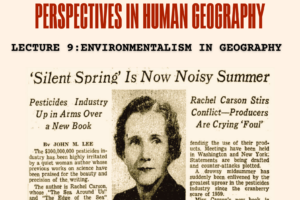
| 55 | Dichotomy and Dualism – II (Man-Environment): The debate of Environmentalism. Determinism (Ratzel, Semple) vs. Possibilism (Blache, Febvre) vs. Neo-Determinism (Griffith Taylor’s Stop and Go Determinism). | ||
| 56 | Quantitative Revolution (QR): The “Schaefer” critique; the shift from description to law-making (nomothetic approach); the use of statistics and models in geography. | ||
| 57 | Locational Analysis: Spatial science; the geometry of space; contributions of Haggett, Chorley, and Harvey (early phase); focus on “Organization of Space.” | ||
| 58 | Radicalism | ||
| 59 | Welfarism | ||
| 60 | Behaviouralism | ||
| 61 | Cultural Geography (Languages & Religions) | ||
| 62 | Human Development: The shift from economic growth to Human Development; Human Development Index (HDI) (Mahbub ul Haq, Amartya Sen); Gender Inequality Index; Multidimensional Poverty Index. | ||
UNIT 2: ECONOMIC GEOGRAPHY (8 Lectures)
| Lecture | Topic | ||
| 63 | World Economic Development: Measurement, Paradigms & Regional Disparities | ||
| 64 | World Resources: Classification, Non-Renewable Energy & Mineral Distribution | ||
| 65 | Energy Crisis: Causes, Effects, Solutions & Hubbert’s Peak | ||
| 66 | Limits to Growth: Concept, Criticism & Conclusions | ||
| 67 | World Agriculture: Typology, Factors & Whittlesey’s Agricultural Regions | ||
| 68 | Agricultural Inputs, Productivity & Von Thunen’s Model | ||
| 69 | Food Security, Global Hunger Index & Famines | ||
| 70 | World Industries: Webber’s Theory, Location Patterns & Trade | ||
UNIT 3: POPULATION GEOGRAPHY & SETTLEMENT GEOGRAPHY (18 Lectures)
| Lecture | Topic | ||
| 71 | Population Distribution & Growth: World & Indian Patterns | ||
| 72 | Theories of Population Growth: Malthusian, Marxist & Neo-Marxian | ||
| 73 | Demographic Transition Model: Stages & India’s Position | ||
| 74 | Demographic Attributes: Fertility & Mortality Determinants | ||
| 75 | Migration: Types, Theories (Ravenstein, Lee, Zipf) & Causes | ||
| 76 | Consequences of Migration & Concepts of Population (Over, Under, Optimum) | ||
| 77 | World Population Problems & Policies | ||
| 78 | Social Well-being, Quality of Life & Population as Social Capital | ||
| 79 | Diversity in India: Racial, Linguistic, Ethnic & Religious Minorities | ||
| 80 | Tribes in India: Characteristics, Major Tribes & PVTGs | ||
| 81 | Rural Settlements: Types, Patterns, Morphology & Factors | ||
| 82 | Environmental Issues in Rural Settlements | ||
| 83 | Urban Settlement Hierarchy & Rank Size Rule | ||
| 84 | Primate Cities & Functional Classification of Towns | ||
| 85 | Rural-Urban Fringe & Satellite Towns | ||
| 86 | Classification & Morphology of Urban Areas | ||
| 87 | Central Place Theory: Christaller & Losch Models | ||
| 88 | Conurbation, Urban Sprawl, Agglomeration & Slums | ||
UNIT 4: REGIONAL GEOGRAPHY (7 Lectures)
| Lecture | Topic | ||
| 89 | Concept of Region: Attributes, Structure & Classification | ||
| 90 | Growth Centres, Growth Poles | ||
| 91 | Regional Imbalance, Regional development strategies; | ||
| 92 | Environmental issues in regional planning; Planning for sustainable development | ||
| 93 | Regional Development Strategies & Historical Background | ||
| 94 | IRDP, CAD & Water Management Programmes | ||
| 95 | Backward Area Development: Drought-Prone, Hill & Tribal Areas, Development of Islands in India | ||
UNIT 5: Models, Theories and Laws in Human Geography (7 Lectures)
| Lecture | Topic | ||
| 96 | System analysis in Human geography | ||
| 97 | Malthusian, Marxian and demographic transition models; | ||
| 98 | Central Place theories of Christaller and Losch | ||
| 99 | Perroux and Boudeville | ||
| 100 | Von Thunen’s model of agricultural location | ||
| 101 | Weber’s model of industrial location | ||
| 102 | Ostov’s model of stages of growth | ||
| 103 | Heartland and Rimland theories | ||
| 104 | Laws of international boundaries and frontiers | ||
PAPER 2: INDIAN GEOGRAPHY (31 Lectures)
UNIT I: PHYSICAL SETTINGS (5 Lectures)
| Lecture | Topic | ||
| 105 | Structure & Relief of India: Rock Systems & Land Diversities | ||
| 106 | Space Relationship with Neighbours & Physiographic Regions | ||
| 107 | Himalayas, Northern Plains & Peninsular Plateau | ||
| 108 | Indian Monsoon Mechanism: Theories, Seasons & Rainfall Patterns | ||
| 109 | Drainage Systems, Watersheds, Climatic Regions & Natural Vegetation | ||
UNIT II: RESOURCES (3 Lectures)
| Lecture | Topic | ||
| 110 | Land, Water, Energy & Mineral Resources of India | ||
| 111 | Forest & Wildlife Resources: Conservation Strategies | ||
| 112 | Energy Crisis: Variations & Geopolitics of Energy | ||
UNIT III: AGRICULTURE (4 Lectures)
| Lecture | Topic | ||
| 113 | Agricultural Infrastructure: Irrigation, Seeds, Fertilizers & Power | ||
| 114 | Land Holdings, Land Tenure & Land Reforms in India | ||
| 115 | Cropping Patterns, Productivity, Intensity & Crop Combinations | ||
| 116 | Green Revolution, White Revolution & Sustainable Agriculture | ||
UNIT IV: INDUSTRY (3 Lectures)
| Lecture | Topic | ||
| 117 | Industrial Evolution: Locational Factors & Types of Industries | ||
| 118 | Major Industries: Cotton, Jute, Iron & Steel, Aluminum, Fertilizer | ||
| 119 | Industrial Policy, SEZs, Multinationals & Tourism | ||
UNIT V: TRANSPORT, COMMUNICATION & TRADE (2 Lectures)
| Lecture | Topic | ||
| 120 | Transport Networks: Road, Railway, Waterway, Airway & Pipeline | ||
| 121 | Ports, Trade Policy, Communication, IT & Indian Space Programme | ||
UNIT VI: CULTURAL SETTING (3 Lectures)
| Lecture | Topic | ||
| 122 | Historical Perspective: Racial, Linguistic, Ethnic & Religious Diversity | ||
| 123 | Population: Growth, Distribution, Density & Demographic Attributes | ||
| 124 | Migration, Population Problems, Policies & Health Indicators | ||
UNIT VII: SETTLEMENTS (3 Lectures)
| Lecture | Topic | ||
| 125 | Rural Settlements: Types, Patterns & Morphology in India | ||
| 126 | Urban Development: Morphology & Functional Classification of Cities | ||
| 127 | Conurbations, Urban Sprawl, Slums & Town Planning | ||
UNIT VIII: REGIONAL DEVELOPMENT & PLANNING (3 Lectures)
| Lecture | Topic | ||
| 128 | Regional Planning Experience: Five Year Plans & IRDP | ||
| 129 | Panchayati Raj, Command Area Development & Watershed Management | ||
| 130 | Multi-Level Planning: Backward, Drought, Hill & Tribal Areas | ||
UNIT IX: POLITICAL ASPECTS (3 Lectures)
| Lecture | Topic | ||
| 131 | Indian Federalism: State Reorganization & Emergence of New States | ||
| 132 | Regional Consciousness & Inter-State Issues | ||
| 133 | International Boundaries: Issues, Cross-Border Terrorism & Geopolitics | ||
UNIT X: CONTEMPORARY ISSUES (2 Lectures)
| Lecture | Topic | ||
| 134 | Natural Hazards: Landslides, Earthquakes, Tsunamis, Floods & Droughts | ||
| 135 | Environmental Issues: Pollution, Desertification, Food Security & Sustainable Development | ||
** COMPLETE UNIT-WISE SUMMARY
| Paper | Section | Unit | Lectures |
| Paper 1 | Physical Geography | Geomorphology | 19 |
| Climatology | 12 | ||
| Oceanography | 9 | ||
| Biogeography | 5 | ||
| Environmental Geography | 5 | ||
| Subtotal | 50 | ||
| Human Geography | Perspectives in Human Geography | 12 | |
| Economic Geography | 8 | ||
| Population Geography & Settlement Geography | 18 | ||
| Regional Geography | 7 | ||
| Models, Theories and Laws in Human Geography | 9 | ||
| Subtotal | 54 | ||
| Paper 2 | Indian Geography | Physical Settings | 5 |
| Resources | 3 | ||
| Agriculture | 4 | ||
| Industry | 3 | ||
| Transport, Communication & Trade | 2 | ||
| Cultural Setting | 3 | ||
| Settlements | 3 | ||
| Regional Development & Planning | 3 | ||
| Political Aspects | 3 | ||
| Contemporary Issues | 2 | ||
| Subtotal | 31 | ||
| GRAND TOTAL | 135 |
This schedule is designed based on the researched micro-detailed UPSC Geography Optional syllabus with special focus on recent question patterns and examination trends.
CivilPrep by Krishna Gupta | Your Gateway to UPSC Success
Links: Telegram | Youtube | Whatsapp | Instagram | Facebook
Geography Optional Foundation Freemium Course:
Geography Optional Foundation Premium Course:

You may also like