

Case Study: Indoor Night-Time Heat Retention in Indian Homes
Background
A 2025–26 study of 50 low- and middle-income homes in Chennai found that indoor temperatures rarely fell below 31°C and often stayed above 34°C even after sunset, with humidity above 75%. This shows that heat stress is no longer only an outdoor or seasonal problem, but also an indoor, structural, and social one.
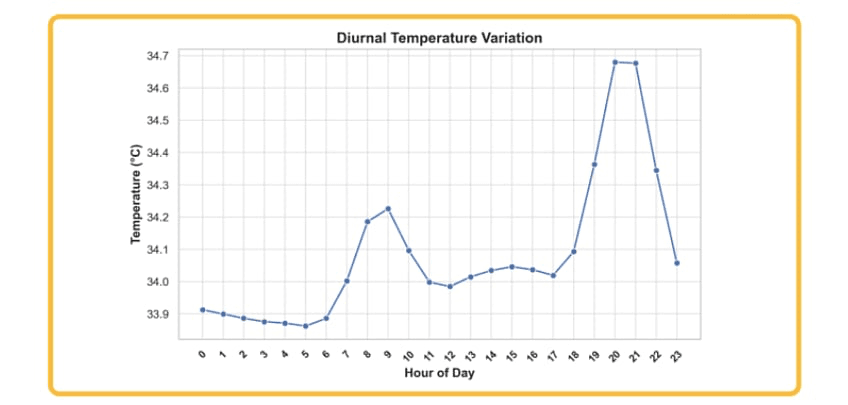
Concept
The case reflects the interaction of climate change, urban heat island effects, and heat-retaining building materials such as brick and reinforced concrete. It shows that thermal comfort is shaped not only by weather, but also by housing quality, ventilation, and income.
Models
- James Morris Blaut (Radical) emphasized spatial inequality, useful here to explain unequal exposure to heat in poor and rich housing.
- Christaller helps explain how urban service concentration leaves peripheral housing with weaker infrastructure and lower climate resilience.
Perspectives
- Environmental determinism – Ratzel: climate and material environment strongly shape daily life and health outcomes.
- Possibilism – Vidal de la Blache: people can adapt through design, ventilation, and behavior even under heat stress.
- Human ecology – Barrows: the home is a human-environment interface where survival depends on adaptation to thermal conditions.
Theories
- Urban Heat Island theory – Oke: cities store and re-radiate heat, intensifying night-time discomfort.
- Vulnerability theory – Wisner et al.: risk is highest where poverty, poor housing, and weak coping capacity overlap.
- Thermal comfort theory – Fanger: comfort depends on temperature, humidity, air movement, and building design.
Laws
- Tobler’s First Law: nearby urban zones often share similar heat-risk patterns.
- Liebig’s Law of Minimum – Liebig: ventilation or cooling becomes the limiting factor in habitability.
- Spatial interaction principle: heat exposure, housing form, and income are connected across the urban space.
Way Forward
Neo-determinism – Griffith Taylor suggests planned adaptation within environmental limits.
Techno-centric approach requires cool roofs, reflective paints, passive ventilation, and efficient cooling.
Sustainable humanism – Gandhi supports low-energy, locally appropriate housing.
Social justice planning – Amartya Sen demands that thermal safety be treated as a basic capability, especially for the urban poor.
Tag:best geography course for upsc mains, Best Geography Optional Case Study, Best Geography Optional Explanation, Best Geography Optional Faculty, Best Geography Optional Institute, Best Geography Optional Test Series, Best IAS Institute in India, Best Platform for Geography Optional, case studies, Case Study, Case Study Mains 2025, Geography Case Study, Geography Optional, geography optional case study, Geography Optional Mapping, human geography, models theories laws and perspective in geography

You may also like

UPSC Geography Optional Solved 2024 PYQ
Possibilism – A Human Centred Approach by CivilPrep