
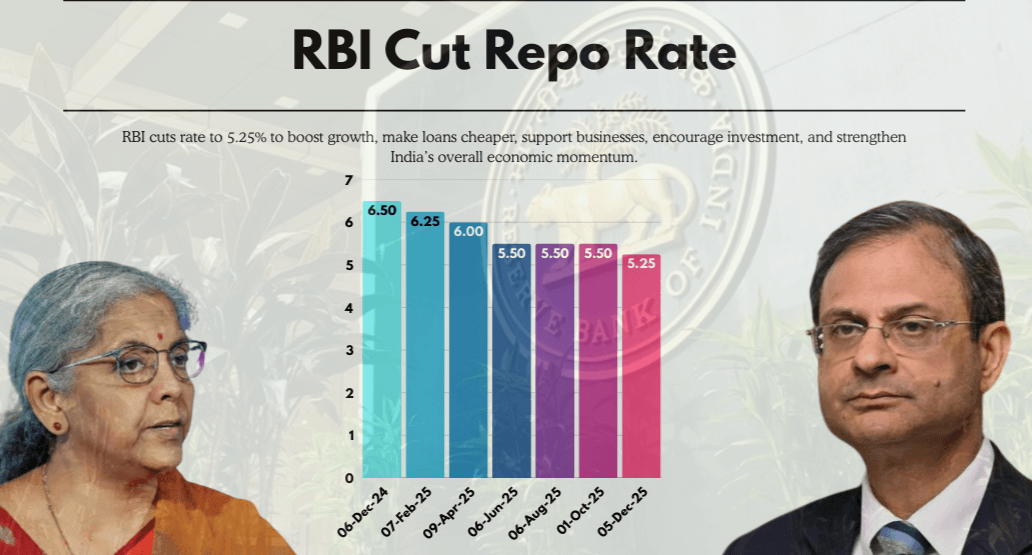
7. Economy – RBI Repo at 5.25%: Growth–Inflation Balance
Context
In February 2026, the RBI Monetary Policy Committee (MPC) kept the repo rate at 5.25% with a neutral stance, while slightly raising GDP growth and inflation projections for FY26.
Background
After a rate‑hike cycle due to high inflation, RBI began easing in late 2025 as inflation approached the lower end of the 2–6% target band. Now, the focus is on maintaining growth while keeping inflation anchored.
Data / Trend
The MPC decision:
Repo rate: 5.25% (unchanged)
FY26 GDP growth: revised slightly upward (approx. mid‑7% range)
FY26 CPI inflation: revised from about 2% to just above 2%, still very low
Analysis & Application
For GS‑3, this showcases flexible inflation targeting: RBI uses low inflation space to support growth while monitoring external risks (oil prices, global tariffs). It affects EMIs, corporate borrowing, investment and exchange rate dynamics. Persistently low inflation may indicate weak rural demand, but it also improves real incomes if wages are stable.
Way Forward
Priorities include improving monetary transmission via stronger bank balance sheets, deepening bond markets, and watching asset‑price inflation. Coordination with government on infrastructure spending, social protection, and structural reforms can lock in high growth with stable prices.
Conclusion
The unchanged repo at 5.25% signals RBI’s confidence in a high‑growth, low‑inflation path, while keeping tools ready for emerging global and domestic shocks.
Tag:asset price inflation risks, bond markets India deepening, corporate borrowing India, CPI inflation forecast FY26, flexible inflation targeting RBI, FY26 GDP growth projection India, infrastructure spending coordination, investment exchange rate dynamics, low inflation high growth India, monetary transmission bank balance sheets, RBI Monetary Policy Committee MPC decision, RBI neutral stance 2026, RBI repo rate 5.25% 2026, repo rate impact EMIs, repo rate unchanged February 2026, rural demand weak inflation, social protection structural reforms
