

Geography Case Study: Buildings, Urban Expansion and Carbon Lock-in By Krishna Gupta
Context
The UN’s Global Status Report for Buildings and Construction 2025–26 shows that global building floor space expanded by about 20% between 2015 and 2024, while energy demand rose by only 11%, indicating that efficiency gains and stricter building codes have moderated energy growth. Yet operational emissions from buildings still rose by 6.5% to nearly 9.9 GtCO2 in 2024, which means the sector remains off track from net-zero goals despite better energy intensity and large efficiency investments.
CivilPrep – Krishna Sir
Concept
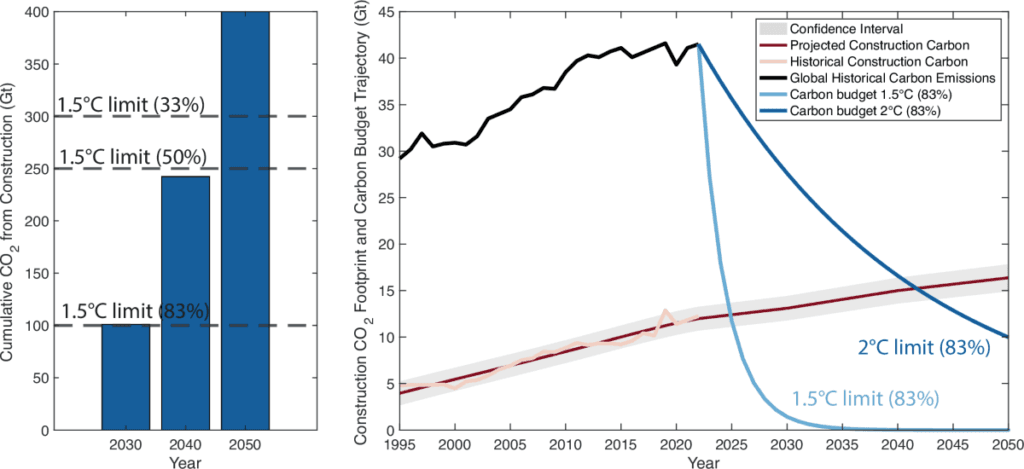
This case reflects the geographical idea of carbon lock-in, where rapid urban growth creates long-lived built environments that continue emitting for decades through both energy use and carbon-intensive construction materials. It also highlights whole-life carbon, which includes operational emissions as well as embodied emissions from cement, steel and aluminium used in buildings.
Perspectives
1. Ecological Modernisation
John Dryzek argued that environmental crises can be addressed through innovation, regulation and institutional reform; in this context, stricter building codes and efficiency upgrades support that perspective.
2. Political Economy
David Harvey’s view of urbanisation stresses that capitalist growth produces built environments that are resource-intensive and unevenly developed, which helps explain why fast construction can intensify long-term emissions burdens.
3. Socio-technical Transition
Frank Geels emphasised that sustainability transitions require simultaneous change in technology, policy, institutions and user practices, which fits the building sector’s need for codes, cleaner materials and renewable integration.
Models
1. Energy Intensity Model
The report shows that global building energy intensity declined by about 8.5% since 2015, proving that lower energy use per square metre can partially offset floor-space growth.
2. Whole-Life Carbon Model
Life-cycle assessment models evaluate emissions from construction, operation and end-of-life stages, making them useful for measuring the true climate cost of buildings.
3. Urban Growth-Emission Model
IPCC-style scenario models show that unchecked urban expansion raises future emissions unless supported by decarbonised infrastructure and policy intervention.
Theories
1. Path Dependence Theory
Brian Arthur’s idea of path dependence explains how early infrastructure choices become self-reinforcing and difficult to reverse in later stages of development.
2. Diffusion of Innovation
Everett Rogers’ theory explains how low-carbon materials, rooftop solar and green construction practices spread gradually through policy support and social acceptance.
Laws
1. Polluter Pays Principle
This principle holds that those generating pollution should bear the cost of mitigation, which supports carbon regulation in the building sector.
2. Precautionary Principle
This law-like environmental norm justifies early action against high-carbon construction even when future impacts are uncertain.
3. Law of Diminishing Returns
Efficiency gains alone yield limited results when building stock expands rapidly, so emissions may still rise despite improved performance per unit area.
Way Forward
Governments must adopt whole-life carbon rules, mandate low-carbon building materials, and strengthen urban planning so that future construction does not lock cities into unsustainable emissions pathways. In India, scaling rooftop solar, green building codes, material recycling and energy-efficient urban housing can make rapid construction more climate-compatible.