

Geography Case Study: Food & Consumer Behaviour
1. Context
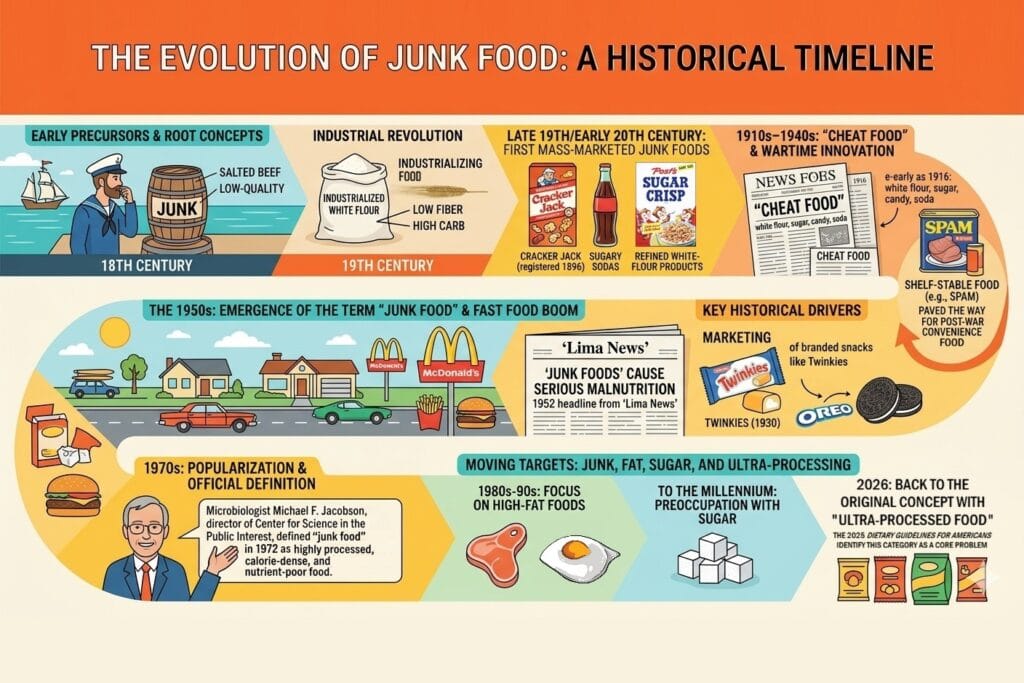
India’s food system is facing a dual burden of malnutrition, rising obesity, hidden hunger, and environmental stress. Malthusian pressure is visible in the mismatch between population growth, dietary demand, and resource quality, while uneven food access shows the spatial inequality of development. Thomas Malthus and Amartya Sen are central here: Malthus warned that population can outpace subsistence, while Sen showed that starvation can occur due to entitlement failure, not just food shortage.
2. Concept
The concept is consumer empowerment for sustainable food-system transformation, where informed demand changes production, trade, and public policy. From a geographical view, this links consumption spaces, market access, and nutrition outcomes. Carl Sauer and Wilbur Zelinsky remain relevant, but Behavioural Geography also matters because food choice depends on perception, habits, and mental maps rather than price alone.
3. Perspective
A strong behavioural geography perspective explains why consumers do not always choose healthy food even when it is available. Kevin Lynch and David Ley are useful here because they studied perception, image, and human decision-making in spatial behaviour. A Marxist thought perspective shows that food choices are shaped by class, market power, and inequality; David Harvey and Neil Smith are important theorists here.
4. Models
The I=PAT model is very useful for this case, as it links environmental impact to population, affluence, and technology. Paul Ehrlich and John Holdren proposed it, and Barry Commoneralso contributed to the broader ecological critique of human impact. In food geography, it helps explain how rising affluence and industrial food systems increase emissions, packaging waste, and ecological stress.
5. Theories
The Malthusian theory and Marxist theory provide two contrasting lenses. Malthus argued that population grows faster than food supply, while Karl Marx and Friedrich Engelsemphasized class relations, ownership, and unequal distribution as roots of deprivation. A radical geography approach, associated with David Harvey and Richard Peet, extends this critique by arguing that spatial inequalities are produced by power, not accident.
6. Laws
The law of diminishing returns and Engel’s law are especially relevant. David Ricardo and Alfred Marshall explain diminishing returns in land and agricultural inputs, while Ernst Engeland Torstein Veblen explain how food spending patterns and status consumption change with income. These laws help show why higher income does not automatically produce healthier diets.
7. Way Forward
India needs nutrition literacy, front-of-pack labelling, PDS diversification, millets promotion, and incentives for healthy food. From a theoretical point of view, Sen supports access and entitlement correction, Harvey supports justice-oriented restructuring, and Ehrlich-Holdrenremind us that consumption must align with ecological limits. Consumer empowerment, supported by state policy, can therefore shift both diets and landscapes.
For Admissions in Mains Test Series 2026
Call or Whatsapp: 8700523510
Tag:best geography course for upsc mains, Best Geography Optional Case Studies, Best Geography Optional Case Study, Best Geography Optional Explanation, Best Geography Optional Faculty, Best Geography Optional Mentor, Best Geography Optional Mentorship, Best Geography Optional Test Series, Best IAS Institute in India, Best Institute in Delhi, case studies, Case Study, Case Study Mains 2025, Geography Case Study, Geography Optional, geography optional case study, human geography, models theories laws and perspective in geography